
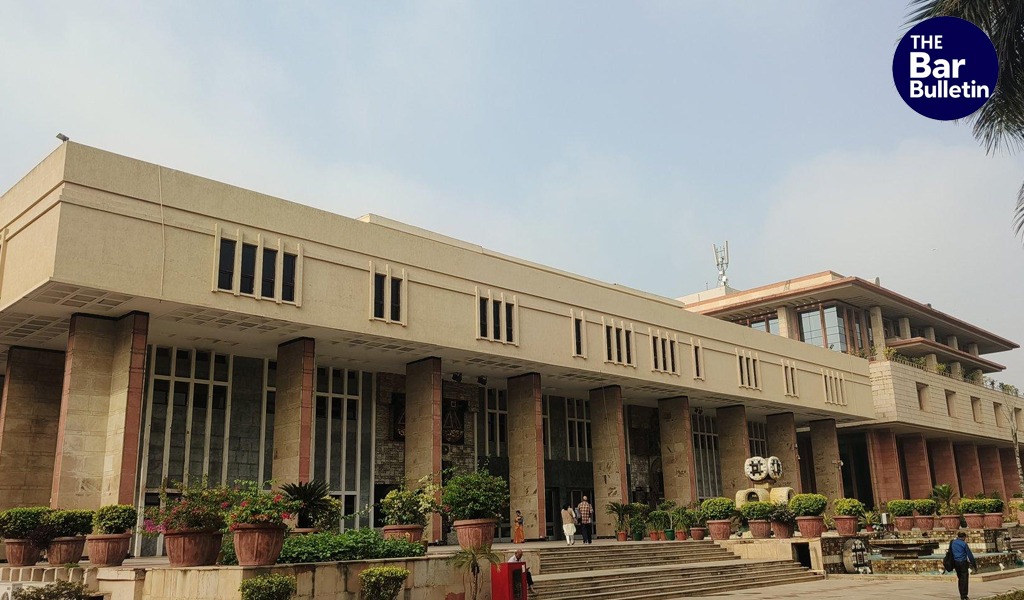

The Delhi High Court has dismissed a writ petition filed challenging the freezing of ₹1.34 crore seized during an NIA investigation into an alleged heroin trafficking and terror funding network. Holding that a litigant cannot invoke writ jurisdiction to revive a statutory remedy lost due to delay, the Court refused to interfere with the freezing orders passed under the NDPS Act.
Justice Amit Mahajan upheld the freezing order issued by the Competent Authority as well as the Appellate Tribunal’s decision dismissing the petitioner’s appeal on the ground of limitation.
Also Read ‘Section 34 Is Not an Appeal’: Delhi HC Upholds ₹130 Crore Award Against South Eastern Railway
The case arises out of an NIA investigation registered in 2022 following the seizure of over 102 kg of heroin concealed in a consignment of liquorice roots. During the investigation, the NIA alleged that proceeds of the drug trade were routed through the bank account of Sandhu Tour and Travel, owned by the petitioner, who was alleged to be a Punjab-based hawala operator. Searches conducted at his premises resulted in the seizure of ₹1.34 crore in cash, which the agency suspected to be proceeds of drug trafficking intended to finance unlawful activities.
The petitioner challenged the freezing order, contending that the authorities had violated Section 68F of the NDPS Act by failing to notify the Competent Authority within 48 hours of the seizure. He also argued that the cash represented legitimate business income and that his appeal before the Appellate Tribunal had been delayed because he was under arrest and unaware of the prescribed limitation period.
The High Court rejected these submissions, noting that the petitioner’s statutory appeal had been filed with a delay of approximately 250 days, whereas Section 68-O of the NDPS Act permits condonation only up to 60 days. It held that once a party allows the statutory remedy to lapse, the High Court should not ordinarily exercise its writ jurisdiction to revive that remedy. The Court also observed that ignorance of law or lack of legal assistance could not justify bypassing the statutory limitation.
On the merits, the Court accepted the respondents’ explanation that the cash had initially been seized during a UAPA investigation under Section 102 of the Code of Criminal Procedure and that proceedings under the NDPS Act were initiated only after the financial investigation revealed an alleged nexus with drug trafficking. It further noted that the petitioner had been given an opportunity before the Competent Authority to explain the source of the seized cash but failed to produce supporting documentary evidence.
Holding that no exceptional circumstances warranted interference under Article 226 of the Constitution, the Court dismissed the writ petition and upheld the freezing of the seized cash.
