

The Bombay High Court reiterated that disputes over delays, permissions, extensions of time, or termination of the underlying contract do not justify an injunction against an unconditional bank guarantee unless fraud or irretrievable injustice is clearly established. The Court reaffirmed that disputes arising from the underlying works contract cannot automatically prevent invocation of an unconditional bank guarantee or counter guarantee.
The High Court held that allegations regarding delayed permissions, conversion of roads into concrete roads, or contractual difficulties may form part of a contractual dispute but do not amount to fraud affecting the very foundation of the guarantee. Further, the possibility of payment under the guarantee causing monetary hardship does not satisfy the strict test of irretrievable harm where recovery can be pursued through arbitration or other legal proceedings.
The Court rejected the contractor’s argument that invocation cannot be restrained merely because the contract had not yet been terminated. The governing factor is the wording of the guarantee, not the status of the underlying contract. Hence, questions regarding responsibility for delay, refusal of permissions, validity of termination, entitlement to extension of time, and compensation were left open for adjudication in arbitration or other appropriate proceedings.
Briefly, the petitioner, Gravit-Onsite-JV, India, was awarded a contract by the Municipal Corporation of Greater Mumbai (MCGM) in 2018 for rehabilitation of a sewerage pipeline network worth about Rs. 19.90 crore. To secure the contract, the petitioner furnished bank guarantees, including a contract deposit guarantee of Rs. 43.40 lakh. The work was originally to be completed by May 2021. However, delays occurred during execution, and the contract period was subsequently extended by MCGM.
According to the contractor, the project was delayed because of factors beyond its control, including failure of trial lining, the COVID-19 pandemic, disruptions arising from the Russia-Ukraine war, delayed permissions from authorities, and refusal by MCGM to allow excavation of concrete roads required for completing the balance work. The contractor repeatedly expressed willingness to complete the remaining work and sought further permissions and approvals. Apprehending termination of the contract and invocation of the bank guarantee, it approached the Bombay High Court under Section 9 of the Arbitration and Conciliation Act, 1996.
MCGM opposed the petition, contending that the contractor had failed to complete the work despite several extensions and that the contractor could not restrain invocation of an independent bank guarantee merely by raising disputes regarding contractual performance. MCGM also argued that the work involved important public infrastructure and that further delay was against public interest.
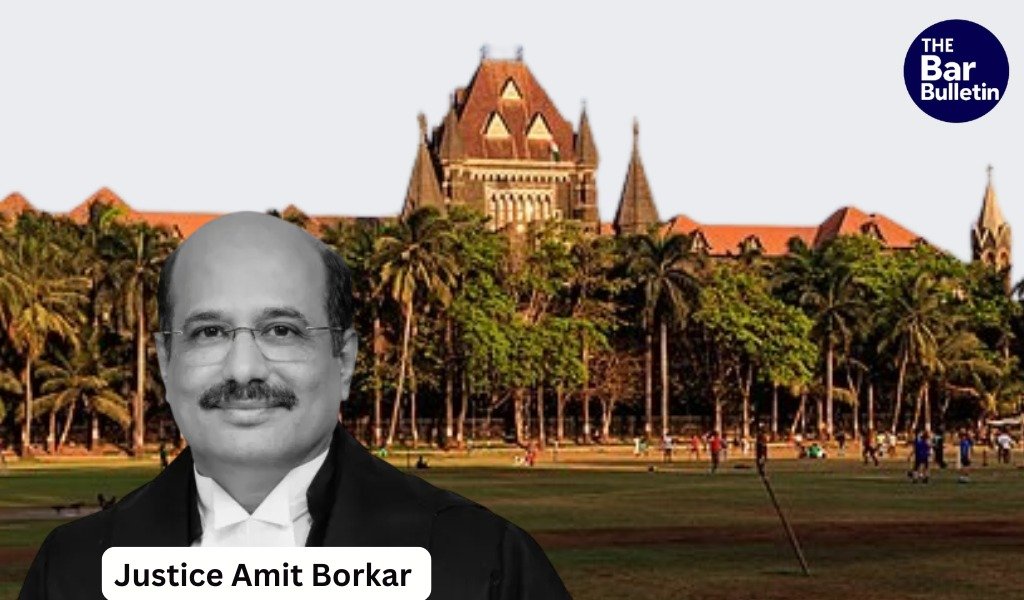
A Single Judge Bench of Justice Amit Borkar observed that an unconditional bank guarantee is an independent contract and disputes relating to the main contract do not automatically affect the beneficiary’s right to invoke the guarantee. The Court reiterated the settled principle that injunctions against invocation of bank guarantees can be granted only in exceptional cases involving egregious fraud or irretrievable injustice.
The Court rejected the contractor’s argument that these strict requirements do not apply when the contract has not yet been terminated. It held that merely because a contractor fears termination or invocation of a guarantee, the legal restrictions governing interference with bank guarantees do not disappear.
On the allegation of fraud, the Court held that the contractor’s grievance that the roads later became concrete roads and that permissions were not granted in time related to performance disputes under the main contract. Such disputes could not be elevated to the level of fraud affecting the very foundation of the bank guarantee. No material showing fraud of an exceptional nature was placed before the Court.
The Court further observed that issues relating to delayed permissions, refusal to allow excavation, impact of the pandemic, shortage of materials, and responsibility for delay may be relevant for determining contractual rights and liabilities in arbitration. However, those issues were insufficient to restrain invocation of an independent financial security instrument.
The Court also found that the petitioner had failed to establish irretrievable injustice. Any loss resulting from invocation of the guarantee was essentially a financial loss that could be compensated if the contractor ultimately succeeded in appropriate proceedings. There was no evidence that recovery of the amount would become impossible in future.
Additionally, the Court noticed that the relief sought was directed against MCGM, whereas the Deed of Counter Guarantee was a separate arrangement involving ICICI Bank Limited and Bank of Baroda. The petitioner failed to establish how MCGM was legally entitled to invoke that counter guarantee or how an injunction against MCGM would effectively prevent its invocation. The Court also noted the absence of documents showing extension of the counter guarantee beyond its recorded expiry date.
