
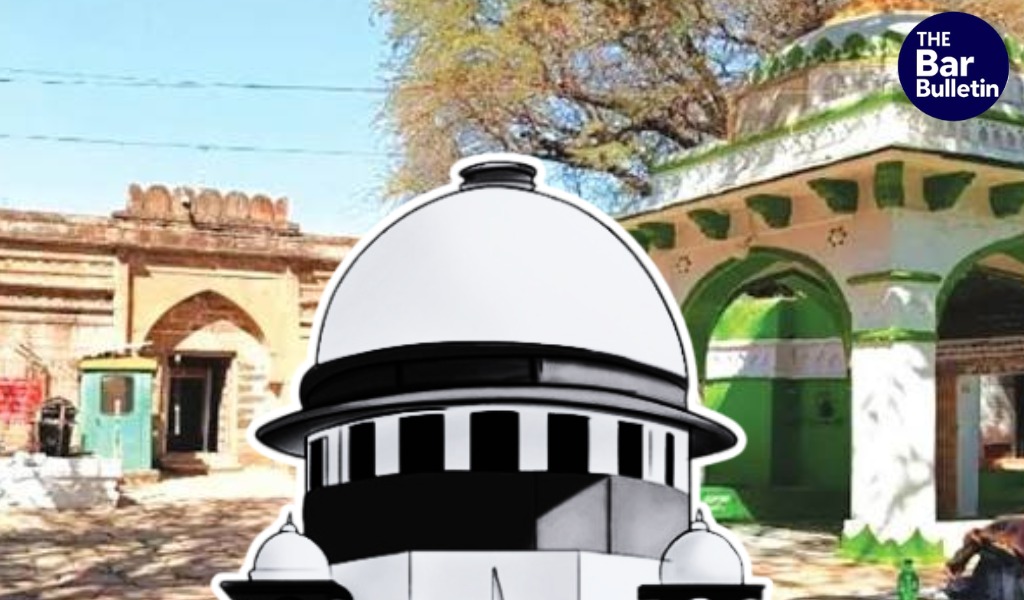

The Supreme Court on Tuesday declined to pass an interim order restoring the pre-existing worship arrangement at the disputed Bhojshala-Kamal Maula Mosque complex in Dhar, Madhya Pradesh, observing that the matter had acquired sensitivity and any interim direction at this stage could create law and order concerns. The Court agreed to hear the challenge to the Madhya Pradesh High Court’s judgment within two to three weeks.
A Bench of Chief Justice of India Surya Kant, Justice Joymalya Bagchi and Justice V Mohana heard appeals challenging the Madhya Pradesh High Court’s May 15 judgment, which recognised the Bhojshala complex as a temple and paved the way for unrestricted Hindu worship at the site.
Senior Advocates, Salman Khurshid, Huzefa Ahmadi, Dr Abhishek Manu Singhvi and Meenakshi Arora, appearing for the Muslim side, urged the Court to restore the arrangement that had prevailed since the Archaeological Survey of India’s 2003 order, under which Friday namaz was permitted while Hindus were allowed to worship on Tuesdays and during Basant Panchami. He argued that the arrangement had continued peacefully for over two decades and reflected communal harmony.
It was submitted that the impugned judgment had abruptly ousted the Muslim community from offering prayers despite centuries of worship and that the Places of Worship (Special Provisions) Act, 1991 barred reopening such historical religious disputes. He further questioned the maintainability of the writ petition, contending that disputed questions of fact had been decided on the basis of ASI reports without a civil trial.
The State of Madhya Pradesh opposed any restoration of the earlier arrangement, informing the Court that the High Court judgment had already been implemented and that the administration had ensured peace at the site. The State submitted that reverting to the previous position after nearly two months would create administrative and law and order difficulties. Expressing concern over the sensitivity of the dispute, CJI Surya Kant observed:
“
“We are over-conscious rather of let us not pass any order which might lead to creating tension and law and order crisis at this point.”
The Bench also cautioned all parties against making statements that could inflame public sentiment, observing that “we should be extremely careful in using any expressions” given the nature of the dispute.
However, issuing notice and granting leave, the Bench directed that, pending final adjudication, an alternate open space be made available for offering Namaz on Fridays. The Court clarified that the arrangement was purely ad hoc, without prejudice to the rights and contentions of either side, and would remain subject to the outcome of the appeals. It further directed that no disruption should be caused to either side’s ingress, egress or religious practices.
The Court also restrained the Archaeological Survey of India (ASI) from carrying out any structural alteration at the disputed site without first obtaining the leave of the Supreme Court.
Treating the appeal arising out of SLP(C) No. 23490/2026 as the lead case, the Court directed that all the connected matters be listed for hearing on August 5, 2026 before a Bench to be assigned by the Chief Justice of India. It also appointed Mr. Fuzail Ahmed Ayyubi and Mr. Aditya Sharma as nodal counsel for the appellants and respondents respectively to prepare common convenience compilations.
